Indulging in
Sadness
Words by Lisa Gwen
Visuals by
Edward Hopper «Nighthawks», 1942 | Oil on canvas
Marlene Dumas
Art elicits emotion. Fact.
Actually, I’ll rephrase. Good art elicits emotion.
And as much as the following may sound like a non sequitur to the above statement: bear with.
Confession: this writer has (very) often been moved to tears when confronted with an artwork which, up until that moment, had only ever been ‘experienced’ in print, or on a screen. The twice-removed two-dimensionality of viewing a painting within such a spectrum, is disengaging; enticing, sure, yet disengaging nonetheless. Books, art mags, periodicals… are at least supplanted by words, critiques, definitions, narratives. Online, one simply consumes regurgitated throngs of visuals that are often cropped, skewed, edited within an inch of life to the original. Online consumption is hardly an experience where the Arts are concerned; and most especially, when the Arts necessitate direct engagement for experience to follow.
Sadness is a curious emotion to experience, especially in relation to art. It has many faces, vestiges even. Yet, art that elicits tears, doesn’t necessarily denote sadness. Tears could be a result of a sense of overwhelming when confronted with a trigger in the form of what is viewed and perhaps considered as the sublime. Yet, it is not comparable to the prolonged sense of sadness, endured hours after viewing the often gargantuan, heavily-laden pieces by Anselm Kiefer, for instance. It is incredibly hard to ignore such a haunting sentiment. Most especially when it is palpable to the point of overriding the excitement of physical engagement.
But how, or why does art trigger sadness?
Ernest Hemingway aptly wrote how “Writing is easy. All you do is sit down at a typewriter and bleed.” Bleeding, whether from our fingertips, or even through our movements… is merely an outpour of emotion that rests, lingers; that however requires satiation, ‘exorcism’. It seems to seep into the surfaces we paint, etch, or mould and into the stories we narrate with words, actions, sounds.
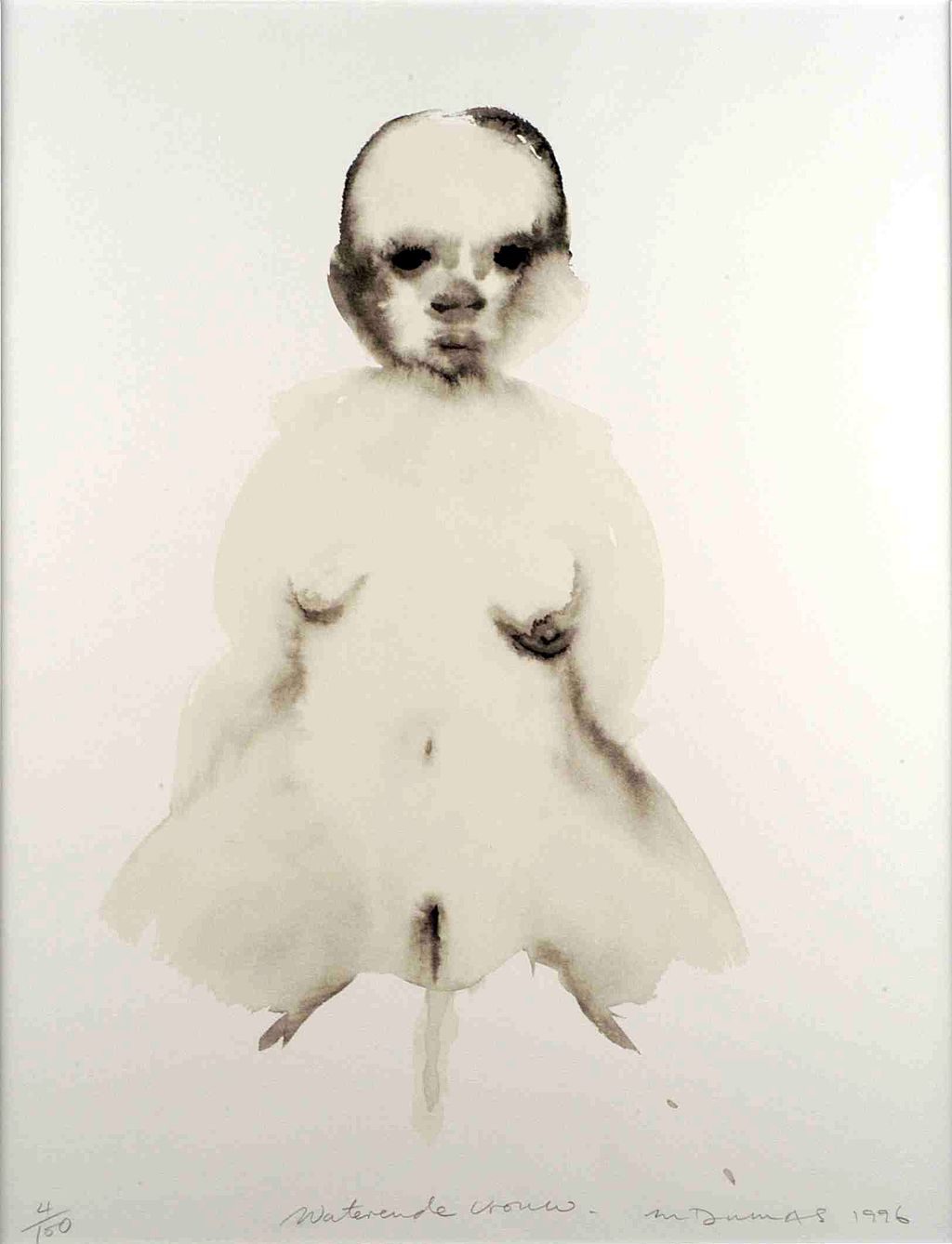
Just as many are physically guilty of being aspectabund, so can a painting or artwork. It often betrays the mood, stance, even mental state of being in which it was made. Take the grief-stricken, war-torn work of Kathe Kollwitz for instance, or the pervasive melancholy, solitary figures inhabiting Edward Hopper’s paintings; the eerily chilling portraits of Marlene Dumas, following her mother’s passing, and even the intensely woeful paintings produced by Vincent Von Gogh, who was known to have been afflicted by mental health issues through much of his adult life.
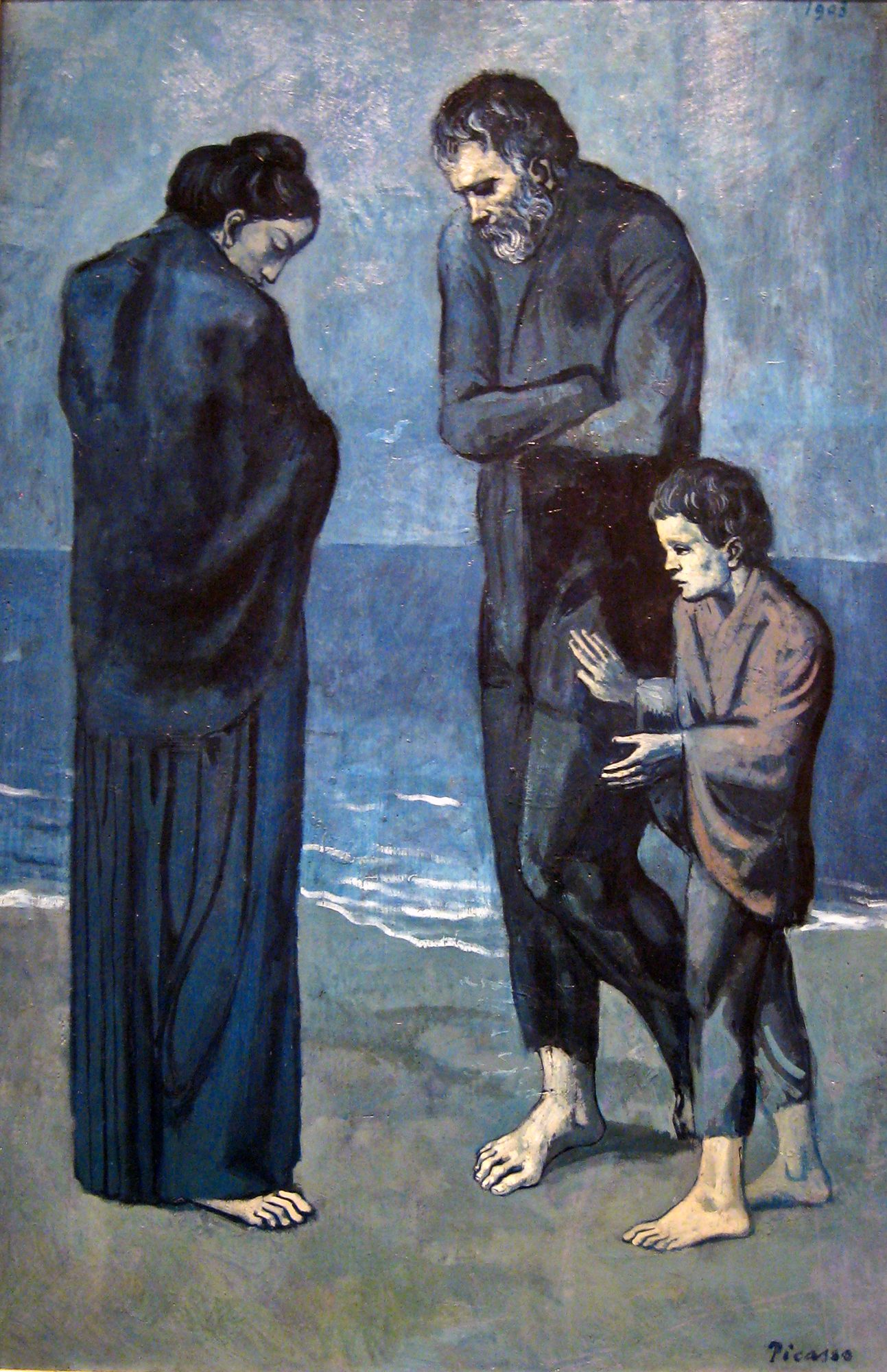
Sadness is also often associated with the colour blue, and perhaps there is no better method of exemplifying this, than through the work of Pablo Picasso and his ‘blue period’. This three-year stint, seemingly triggered by the suicide of a close friend, resulted in the artist suffering from a severe depression, during which time the Cubist master produced some of his most poignant and powerful work. The Old Guitarist (1903), La Vie (1903), The Tragedy (1903), Le Couple / Les Miserables (1904), are all archetypal paintings which amply manifest the state of mind and emotion during which each was created.
Yet somehow, it is this state of mind that actively seeks out contexts, situations, figures that are both representative and reflective of… and through which a kindred emotion is consequently identified. French-born novelist Anais Nin wrote: “You do not see the world as it is. You see it as you are.” Which begs the question: is the interpretation of art merely a reflection of the self, and one’s personal state of mind / emotion? Or is it a complex combination in which the producer’s intention and sentimental outpour uncannily strike a chord with one or more spectators?
After all, sadness is as attractive a quality, as any other.
Join the Club
Like our stories?
You’ll (probably) love our newsletter.
@media only screen and (min-width: 981px) { .et_pb_subscribe .et_pb_newsletter_fields > p { flex: auto !important; } .et_pb_subscribe .et_pb_newsletter_fields p.et_pb_newsletter_field { margin-right: 2%; }}Read more
Powered by
Publications
Social
Legal