
Bauhaus Design

The Bauhaus emblem, designed by Oskar Schlemmer, and adopted in 1921.
The Bauhaus was a German aesthetic movement that existed between 1919 and 1933. Its purpose was to combine all artistic mediums into a single coherent approach, blending individual artistry with mass manufacturing and usefulness. Bauhaus design is frequently abstract, angular, and geometric, with little decoration.
The architect Walter Gropius started the Bauhaus art movement in 1919 in Weimar, Germany. His ambition was to lead a school that took a comprehensive approach to art. Instead of having separate schools for painting, sculpture, and architecture, Gropius sought to integrate all of these media under one roof so that they could inform one other.
While the concepts of the school became more obvious and distinct, the forms they took remained diverse. Artists in different fields studied under the Bauhaus art movement. The movement had attracted a lot of attention by 1932. Instead of being able to capitalise on its growing popularity, the institution was besieged by Germany’s new Nazi regime. The school briefly relocated to Berlin, but it was compelled to close its doors in 1933. Its influence had already spread beyond the confines of its physical site.

Image Source: Bauhaus building – Wassily Chairs by Marcel Breuer (1925/26)
The Bauhaus art movement had numerous creators who had a huge influence in their respective professions.
Gropius, Walter
Gropius, as the originator of the Bauhaus, is regarded as one of the most significant personalities in this architectural style. Gropius was a fervent believer in architecture’s utility, rejecting connections to prior styles or adornment. As a result, his structures are exceedingly modernist, geometric, and minimalist, encapsulating Bauhaus style.
Breuer, Marcel
Marcel Breuer was one of the Bauhaus’s first and youngest painters. His professional background is in architecture and furniture design (his Cesca Chair is especially famous). His architecture is slightly more brutalist than Gropius’, although the movement’s influence can be seen in all of his work.
Paul Klee
Paul Klee was a painter whose work incorporated Cubism, Surrealism, and Modernism. He was instrumental in defining the aesthetic of Bauhaus movement artwork, acting as a teacher at the school and publishing one of the most important pieces of theory in the modern art movement: Writings on Form and Design Theory.
Annie Albers
Anni Albers was a textile artist who helped to pioneer the movement’s ideas of combining use and art. Her textiles incorporate geometric and modernist designs from the movement.
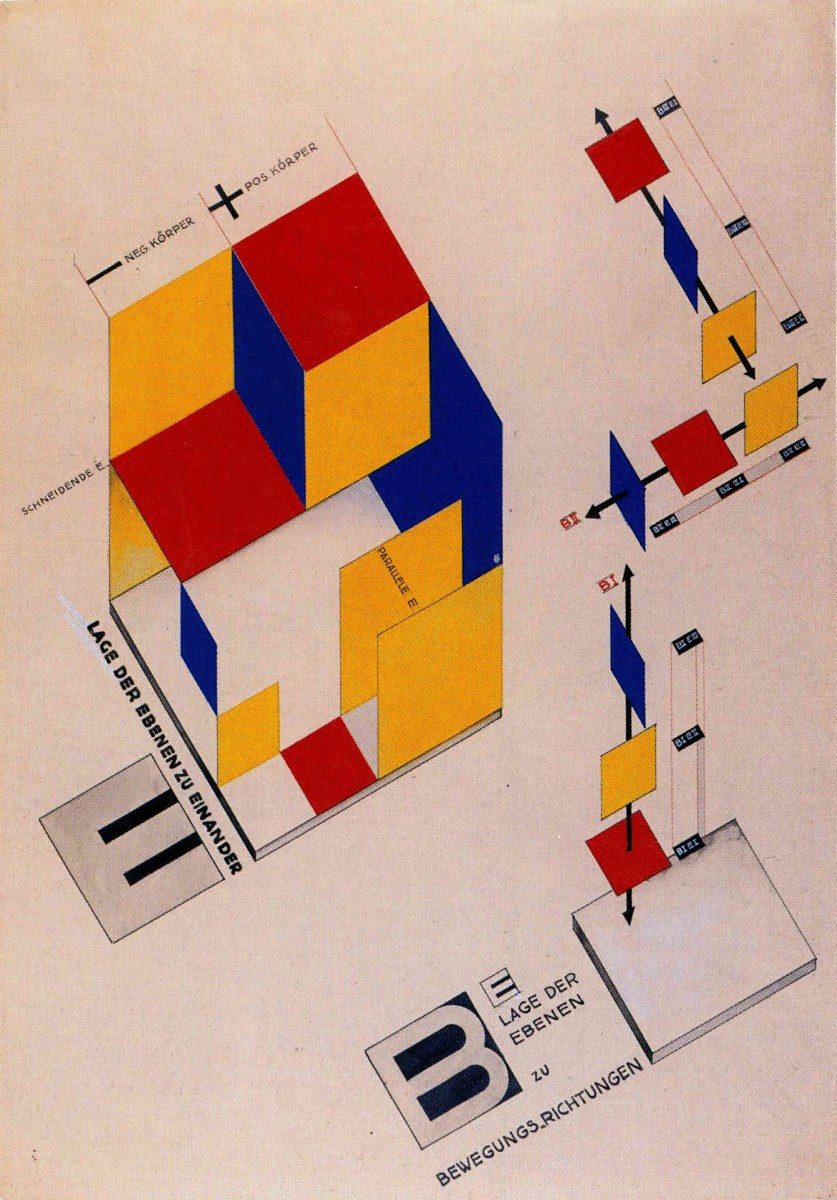
Mechanical Stage Design by Joost Schmidt, 1925.
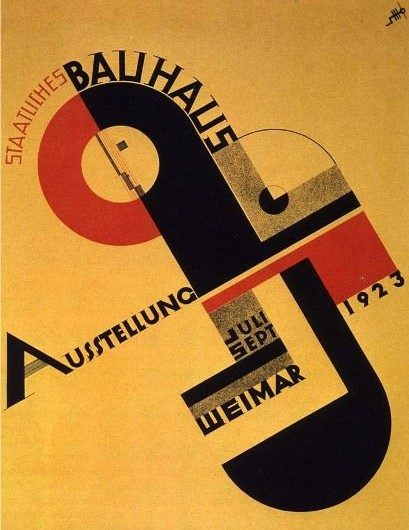
Poster for the Bauhausaustellung (1923).
Be part of our
community
Explore art, photography and design that inspires you. Discover new artists,
follow your favorites and connect with the creative community.
Powered by
Publications
Social
Legal