
The hidden world of auction houses
in conversation with Antonio Soldi
Auction Houses are truly fascinating but unknown to most.
Let’s begin by clarifying to our readers what an auction house does and the main figures who inhabit it.
An auction house is in the business of selling goods, usually art goods, to the highest bidder. So, the auction house does not buy the goods, but sells them by earning a percentage, so-called “commissions.” This is a crucial point and is the reason for the big difference between an antiques dealer or gallery owner and an auction house. The potential client approaches the auction house and proposes an asset. The expert in the relevant department evaluates this asset and agrees with the owner on the “reserve price,” the figure below which the object cannot be sold. At this point the work is more thoroughly studied, cataloged, photographed, and entered into the auction where it is to be offered to the public. During the auction the participants will make their bids and the object will be awarded to the highest bidder. The owner of the item who had entrusted it to the auction house will be awarded the full amount resulting from the bidding combat minus the commission percentages contractually established by the auction house. This type of company is constituted as follows: an administrator who may also be the sole owner and who runs the auction house, the various directors as well as experts who head the different departments (with their respective assistants), the rest of the staff consisting of photographers, stockists, secretaries, cleaners, etc., and the staff of the auction house.
What does a typical work day look like for you?
There is no real work routine. It may happen that one has to be present in the office waiting for potential clients, with whom one has previously interfaced, to bring their goods to propose to them and ask for an evaluation. This is especially the case when the goods are transportable directly by the owners, otherwise it is the experts from the departments who go to the potential clients’ homes to view the works. If the appraisal advanced by the expert meets with the consent of the owner at that point the asset is picked up and taken to the auction house’s warehouse. Thus begins a second phase of study and in-depth investigation from which the catalog entry is derived. So, my work is divided into two stages: in the first stage there is contact with the potential client, a preliminary evaluation and an attempt to agree on the reserve value; in a second stage, the one I prefer, there is study and in-depth study. This study phase can also be carried out through bibliographic research or through comparisons with works in museums. From this perspective, living in Rome is a great advantage given the presence of many important museums and excellent libraries, such as the Hertziana Library, one of the best in the world.
How often do you manage to organize an auction? Most especially, how much research work is needed behind one?
The choice of auction calendar scheduling is made on the basis of comparison with all other departments. In fact, the various auctions (modern antiques, contemporary art, jewelry, old books, general antiques, etc.) should not overlap. What other auction houses do is also decisive in establishing the schedule, and for obvious competitive logic, it is preferable not to propose an auction on the day when other companies are doing the same type of catalog. You must therefore try to “jam” the sale days by trying to avoid offering the same categories of lots on the same day, to prevent possible clientele from not attending your auction since they are already busy attending another one. The third decisive factor is then determined by the quantity and quality of consignments. There are periods when we receive many more lots than at other times. A lot of works are needed to make an auction and, therefore, the consistency of the consignments also determines the cadence of sales. Related to the latter reason is also the amount of research needed. The more lots there are, the more research tends to be needed. It must be said, however, that at face may happen works that are particularly difficult to understand whose catalog entry takes a long time. So, in general, it all depends on the quantity and type of holdings that manage to converge.
Can you define the persona of a typical auction buyer?
The exhibition days, which precede the sale, and the actual auction days are fun events. The type of audience that comes by to visit or participate in the auction is very diverse. Professors or scholars (and I have happened in this respect to make decisive encounters from which solid friendships were later born), collectors and enthusiasts, dealers and antiquarians (who are usually very recognizable…), people who are simply looking for something to furnish their homes or perhaps just want to drop by and take a look at the exhibition. Again, some distinctions can be made, and generally Chinese customers are great fun: they are exuberant and make the atmosphere particularly lively.
What kind of course of study did you have to go through in order to work in the auction house?
I work as a specialist in the department of ancient paintings, the so-called “Old Masters” department. Although I have a university education, with bachelor’s and master’s degrees, and although I am currently attending the School of Specialization in Cultural Heritage at La Sapienza University, I believe that the decisive factor in getting me this job was attending museums and the world of antiquarians. My father is an antiquarian, so in this sense I had an advantage, and the world of the art market is a world that I have well and truly frequented since childhood, although I tend to prefer studying. Frequent attendance at museums is then a central aspect, and training “the eye” as it is called in the jargon is very useful for doing this kind of work. Also because a direct knowledge of the works in their physicality is very important, and it is a subject that is not much explored in the university world where, for obvious reasons, a theoretical aspect is preferred. I have memories of long afternoons studying in museums in the company of various colleagues. I then consider myself particularly fortunate to be able to seek advice and help from Andrea G. De Marchi, one of the few who still practice the discipline of “attribuzionismo”. I esteem De Marchi to be one of the most competent connoisseurs in the field, and his support has often been crucial.
Tell us about your favorite item your auction house managed to have sold.
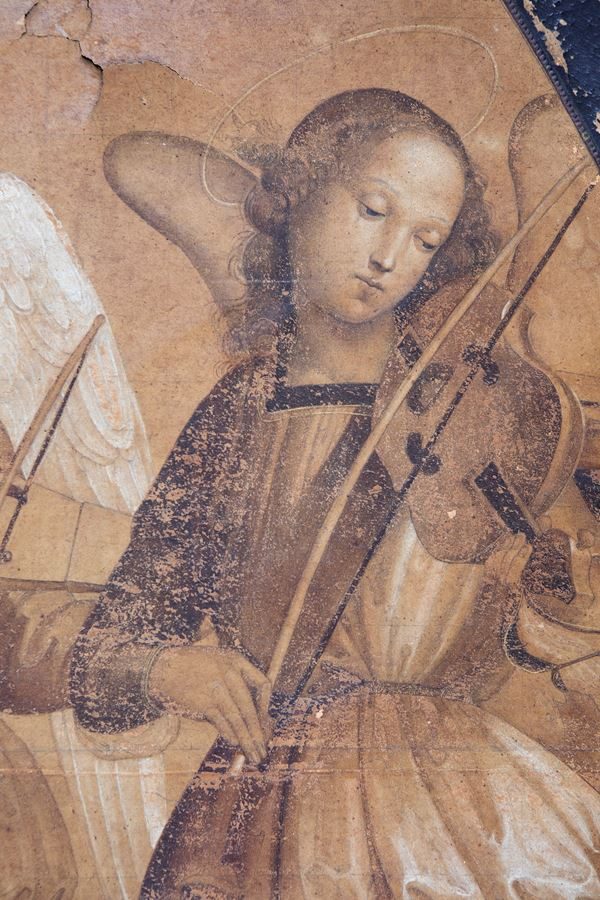
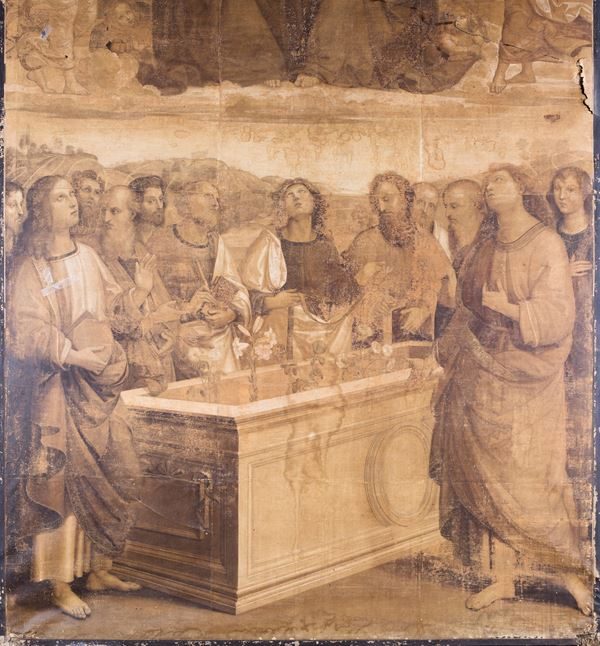
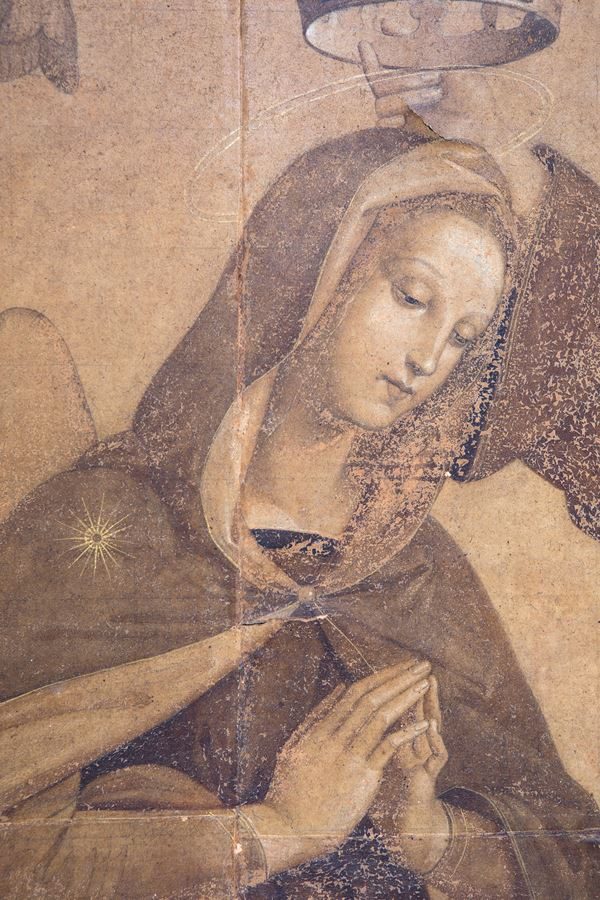
A couple of examples come to mind. One day there happened to be a rather enigmatic painting depicting a woman with a score on which I am still not sure of the identity. It could be a rather “secularized” depiction of Saint Cecilia or a depiction of an Allegory of Lyric. The painting was badly reduced and very dark, barely legible. I thought of referring it to the context of the Florentine painter Cesare Dandini. The painting was then hotly contested and exceeded the reserve price by ten times. I then became friends with the buyer, a collector I happen to hear from often. Then, recently, came a truly unusual object: a 1-to-1 reproduction of Raphael’s Pala degli Oddi. It is a 19th-century drawing of spectacular quality that, among other things, shows some details of Raphael’s famous painting that are now no longer visible because they were additions that were later, through various restorations, rightly removed. In addition to the artistic interest determined by the quality of the work there is also a documentary interest, so to speak, in that this drawing shows certain additions made by the various historicized restorations that are no longer visible today. I have ideas about what this object might be, but that would be too long a discussion. It was interesting to have to handle it and I was able to meet, thanks to the interest that this work determined, the official restorer of the Oddi Altarpiece as well as the director of the Vatican Museums.
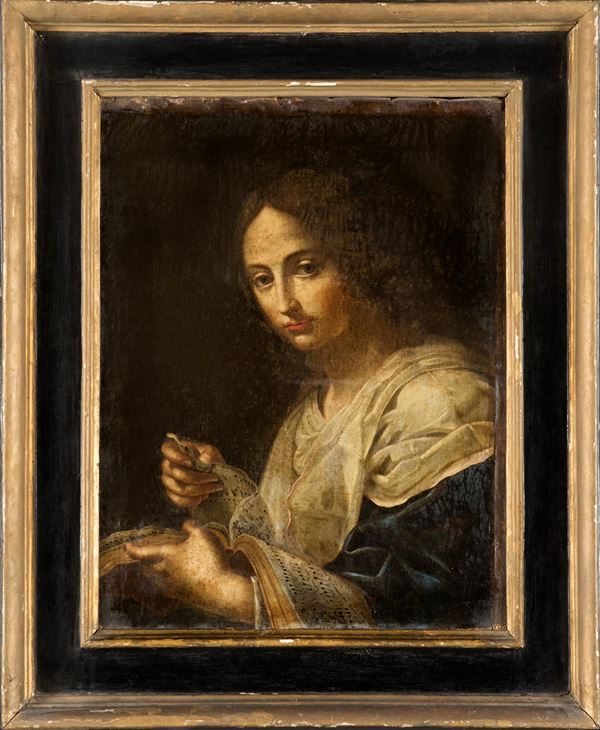
Image Credits:
Be part of our
community
Explore art, photography and design that inspires you. Discover new artists,
follow your favorites and connect with the creative community.
Powered by
Publications
Social
Legal