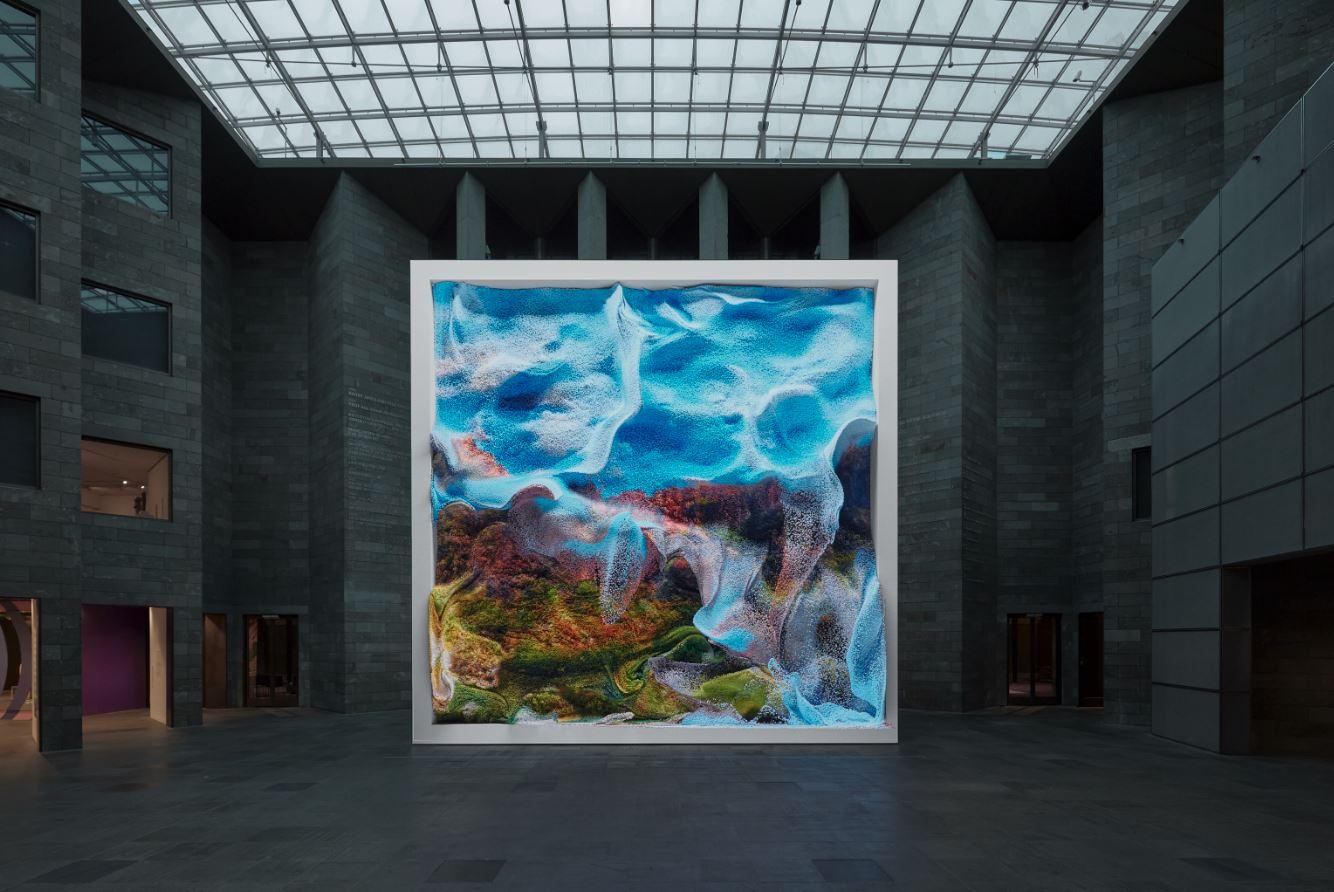
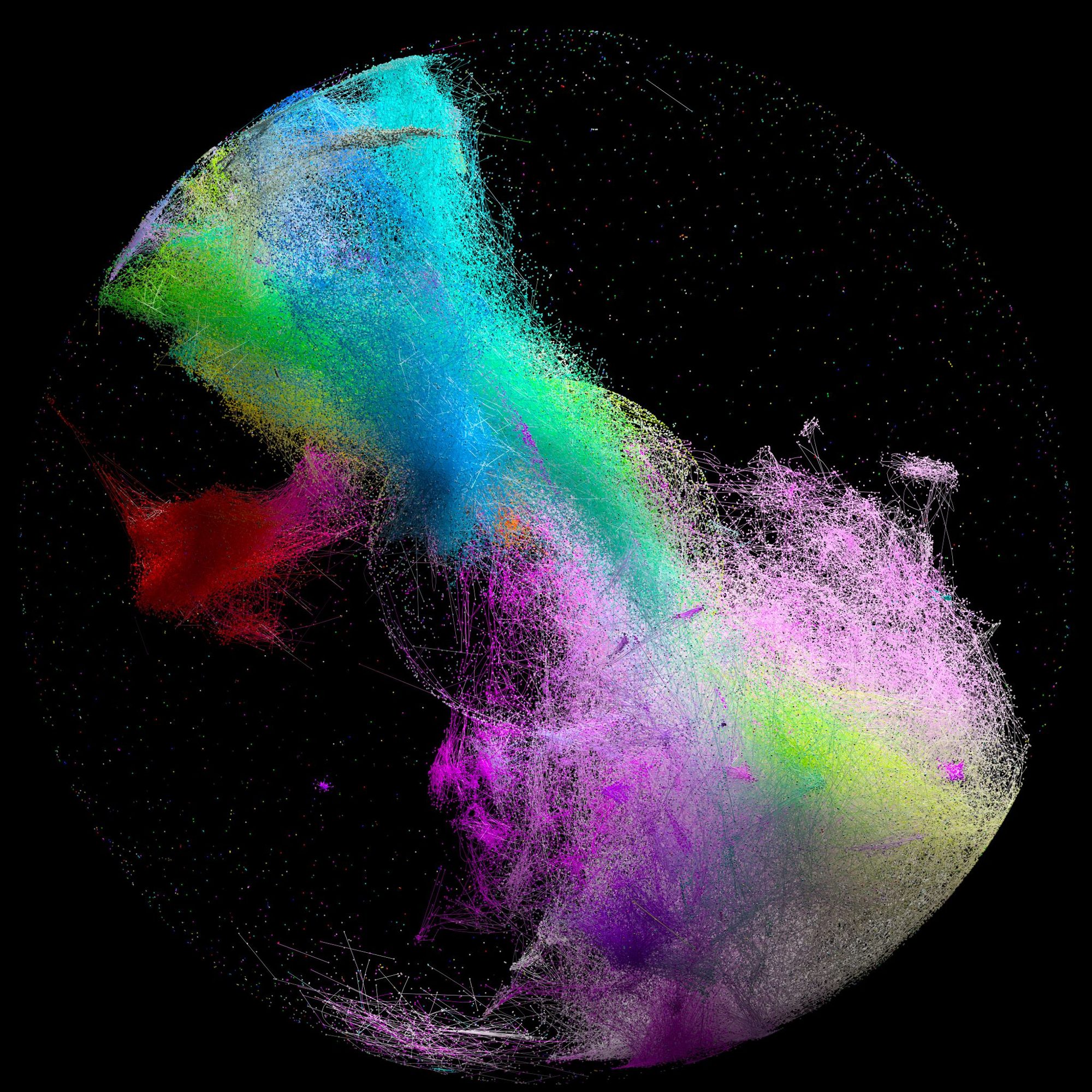
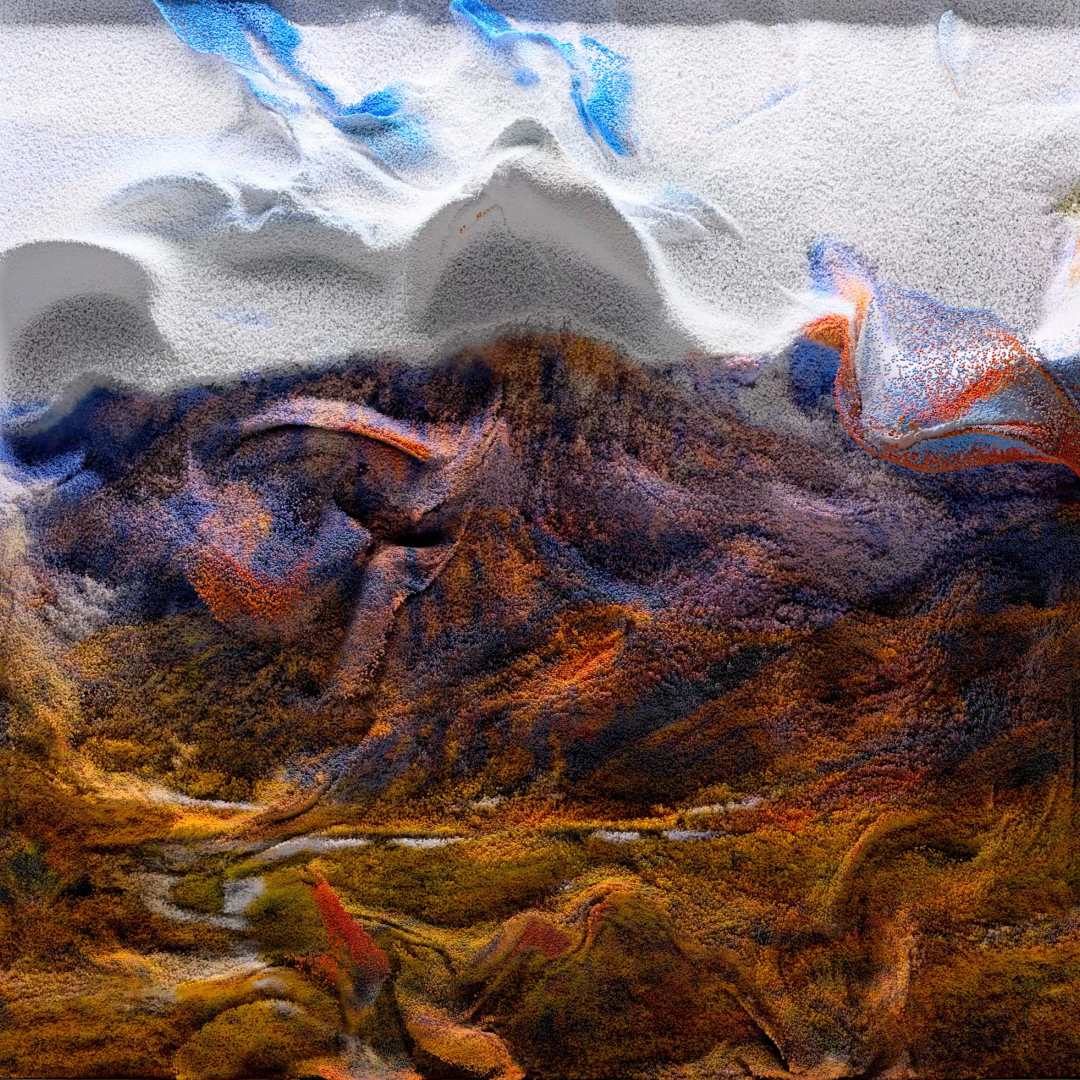
In conversation with Refik Anadol. Meet the cover artist of The Ecstasy Issue, Refik Anadol. With his distinctive and thought-provoking works, Refik Anadol highlights the significance of humanising technology and data and offers an unique take on how these disciplines affect our day-to-day lives. Anadol is a leading figure in the field, and his thoughts and concepts are certain to challenge and inspire the way we think about the meeting point of art, technology, and human experience. Read the full thing on Impeached: Ecstasy. How would you define your work? Since 2016, I have been conducting interdisciplinary research on the relation betweenthe human mind, architecture, and aesthetics to speculate responses to this question: If machines can “learn” or “process” individual and collective memories, can they alsodream or hallucinate about them? I take the data that flows around us as my primarymaterial and the neural network of a computerized mind as my collaborator. I like tosay that I paint with a “thinking brush” while reflecting on new forms of narratingthememories of humanity in physical and virtual spaces, including the blockchain. Thesedreams come in the forms of site-specific parametric data sculptures, live audio/visual performances, immersive installations, and NFTs, which collectively offer a dramaticrethinking of our environments. How do you think AI is impacting humanity and challenging our everyday lives? I am interested in exploring how the perception of time and space are radically changing now that machines dominate our everyday lives, and how the digital age and AI allow for a new aesthetic technique to create enriched immersive environments. Anil Seth’s research on consciousness poses inspirational challenges that I constantly return to in order to define the scope of my work regarding immersive art and visual perception of space. What we are seeking to uncover in our Studio is the possibility of creating an immersion experience through art to feel like we are in the mind of a machine-brain that hallucinates based on the data that it artificially “perceives.” Our current AI research addresses the question of how media art and post-digital architecture can help us speculate new definitions of consciousness and intelligence. Our practice includes an interdisciplinary network of neuroscientists, philosophers, visual artists, computer scientists, and computational designers who continue their cutting-edge research in various parts of the world. We use the most innovative methods available to us and imagine a hopeful future where a symbiotic relationship with machines will give us new insights, knowledge, and the power to not only dream, but create a better world. Can you express your views on data and memory? To me, data as a medium or as a material is beyond just ones and zeros. I don’t look at data as just numbers. I look at them as memories, as the meaningful clusters of important moments transformed into digital entities and stored in the mind of a machine. I believe when we focus on collective memories, we find something we all care about…if you detach ego from data, you are left with something very fresh andimportant for the future of humanity from the perspective of history-making. I amcontinuously fascinated by the intersection of solid architecture and intangible elements—the data points that surround us, the flexibility of memory. And every work I have completed to date bears the traces of this fascination. And why are these collective memories so important to you? Collective memory to me is a key to inventing the language of humanity. There are several reasons for this: First, we are living in a world where our every single actionis predicted by various systems, software and hardware. Free will and privacy are absolutely at risk for humanity. In the most fundamental sense, the most precious andpersonal data is our memories. Second, from a neuroscientific perspective, there are diseases like dementia and Alzheimer’s that cannot be cured at the moment. Our memories might dissolve into infinity without our will. Lastly, what is the most objective data in the world? I found an answer to this question in the collective memories of humanity. Using these key memories of time and space perhaps we canimagine a new, shared dream that can help us heal and become better collectively. Weare trying to craft meaningful and purposeful narratives from space, time, nature, andurban based datasets that will hopefully be experienced and understood by anyone from any age and background. Can you explain machine hallucinations? Even though I collaborate with machines, the conceptual framework behind each research unit is a strong preoccupation with understanding consciousness. This understanding requires insight into how perception, unconscious states, and dream states operate. Thus, I create various analogies between my work and all the conscious and unconscious experiences that make us who we are. For Machine Hallucinations, we have been utilizing machine intelligence as a collaborator to human consciousness, specifically DCGAN, PGAN and StyleGAN algorithms trained on these vast datasets to reveal unrecognized layers of our external realities. We collect data from digital archives and publicly available resources, then process the millions of photographic memories with machine learning classification models. The sorted image datasets are then clustered into thematic categories to better understand the semantic context of the data universe. This expanding data universe not only represents the interpolation of data as synthesis, but also becomes a latent cosmos in which hallucinative potential is the main channel of artistic creativity. Melting Memories was the first work of yours that explored the intersection of art and neuroscience. Can you tell us more about that? For Melting Memories, the inspiration came from a rather tragic family event that I experienced during one of my visits to Istanbul when I found out that my uncle was diagnosed with Stage 1 Alzheimers. After hearing this news, all I could think about was howto find a way to contain and cherish our memories together. I refused to admit that my uncle’s memories were disappearing but instead imagined that they were melting, changingshape, transforming into a different material. And I did my best to translate these feelings into my art practice. So, we created Melting Memories in collaboration with the Neuroscape Laboratory at the University of California, San Francisco. It is a data sculpture that explores the materiality of remembering through the aesthetic interpretation of EEG (Electroencephalography) data. You’ve coined several terms during your artistic journey. Can you tell us more about them? I coined the terms AI Data Painting and AI Data Sculpture to describe site-specific three-dimensional, dynamic sculptures at the intersection of architecture, media art, light studies, and AI-based data analysis. I envisioned AI Data Paintings moving beyond the integration of media into built forms, translating my logic of a new media technology as well as my vision of post-digital architecture into spatial design. Gene Youngblood’s “expanded cinema” has been of enormous inspiration as I have started to build my new concept, Latent Cinema, based on experimentations with immersive art and data sculptures. With data-based, archive-motivated, and meditative Latent Cinema experiences – for example, in any of the immersive works we have shown in Stockholm, NYC, Berlin, and Istanbul in the past 5 years – our goal was to evoke a sense of expanded consciousness with a strong emphasis on innovative storytelling. For me, expansion is attached to human potential for decentralization and disorientation rather than only a technological expansion. Explore art, photography and design that inspires you. Discover new artists, Powered by Publications Social LegalWhere machines and humans intersect: Meet AI artist Refik Anadol
Visuals courtesy of the artist.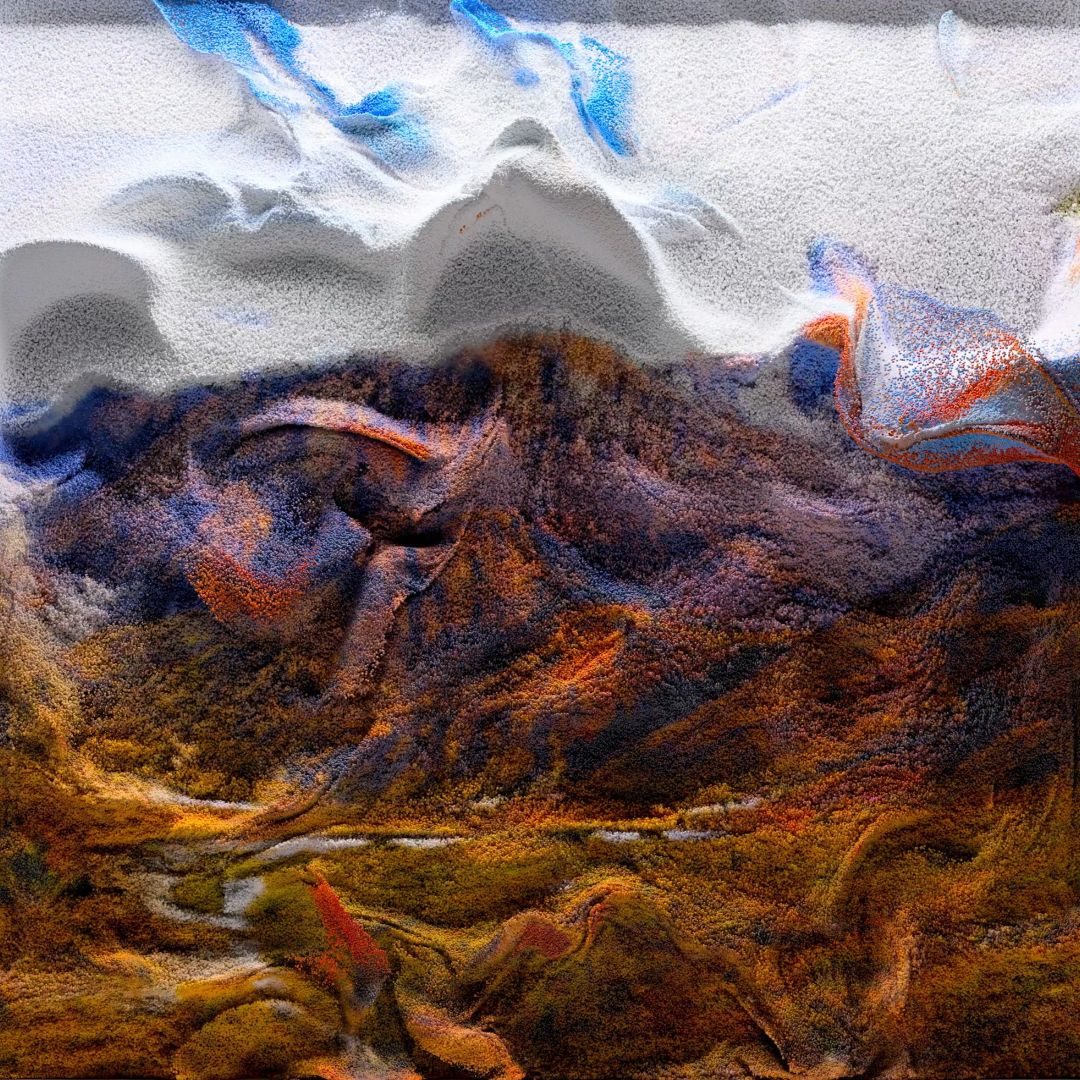
Curious for more?
170+ pages of ecstatic words and visuals
Limited copies availableI look at data as memories, as the meaningful clusters of important moments transformed into digital entities and stored in the mind of a machine.
Be part of our
community
follow your favorites and connect with the creative community.
Arts & Culture
Refik Anadol – Data Humanism