Artists are forever entrapped in some form of ideology
Words by Lisa Gwen
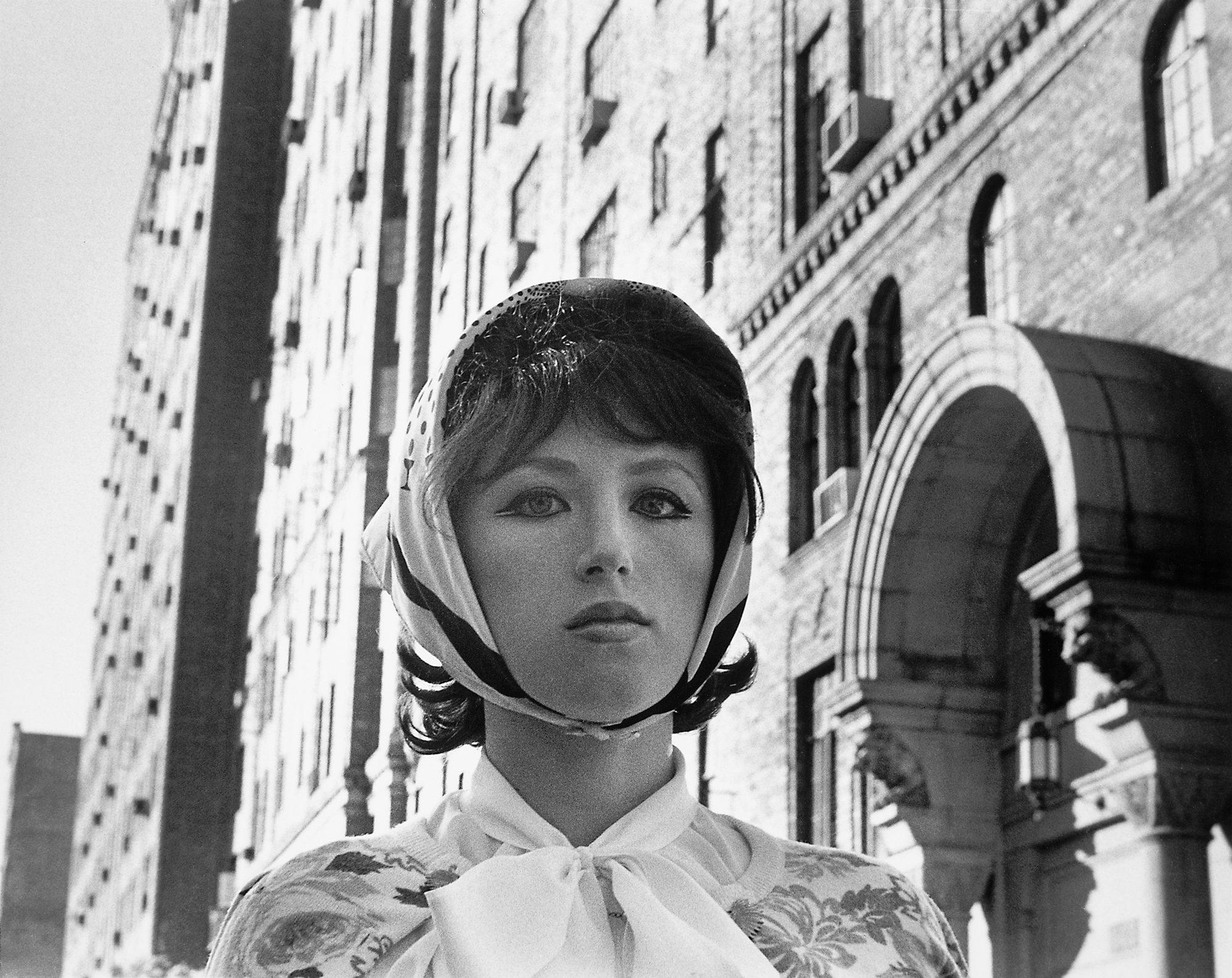
Visuals by Cindy Sherman, courtesy of the artist and Metro Pictures, New York
It is understood by now that all art is ideological and all art is used politically by the right or the left, with the conscious and unconscious assent of the artist. There is no neutral zone. Artists who remain stubbornly uninformed about the social and emotional effects of their images and their connections to other images outside the art context are most easily manipulated by the prevailing systems of distribution, interpretation, and marketing.” Lucy R. Lippard, Art and Ideology, 1984
Ideology is indeed a hard term to define. Its meaning and connotations have been changing and evolving over the past decades. The definition of such a term is very much relevant to the times we live in, and perhaps, that is why there is no fixed definition to it. Many have analysed it and developed it throughout the years.
Antoine Destutt de Tracy first coined the term in 1796, where his primary motif for coming up with such a name was to define the science of ideas. Marx and Engles later followed this study of ideology, with additional changes and theories. They argued that ideologies served as a tool of power to control and dominate mass culture. They also considered ideologies as a method of human categorisation.
Such ideologies were presented as truth-claims that represented power and a source of validation for the ruling class. The Marxist theory on ideology was considered as a “pathological product of historical circumstances and that it will wither away when such circumstances are improved.
Works of art (…) are not closed, self-contained and transcendent entities, but are the product of specific historical practices on the part of identifiable social groups in given conditions, and therefore bear the imprint of the ideas, values and conditions of existence of those groups, and their representatives in particular artists”
Artists are inevitably affected by the world they live in – whether the works are a response to society or not, they are still part of some form of an ideology. An artist’s visual baggage is constantly influenced by the surroundings, experiences and the society he/she lives in. It is impossible to be isolated from the rest of the world and to some extent, even if there was such isolation, it would still be considered as a form of ideology in its own right. The ‘rejection’ of society automatically creates another form of ideology. Thus, to some extent, it is almost impossible to escape ideologies.
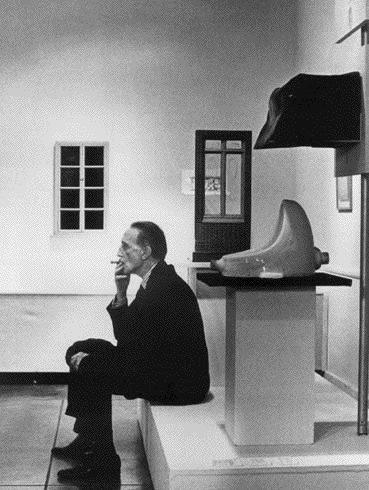
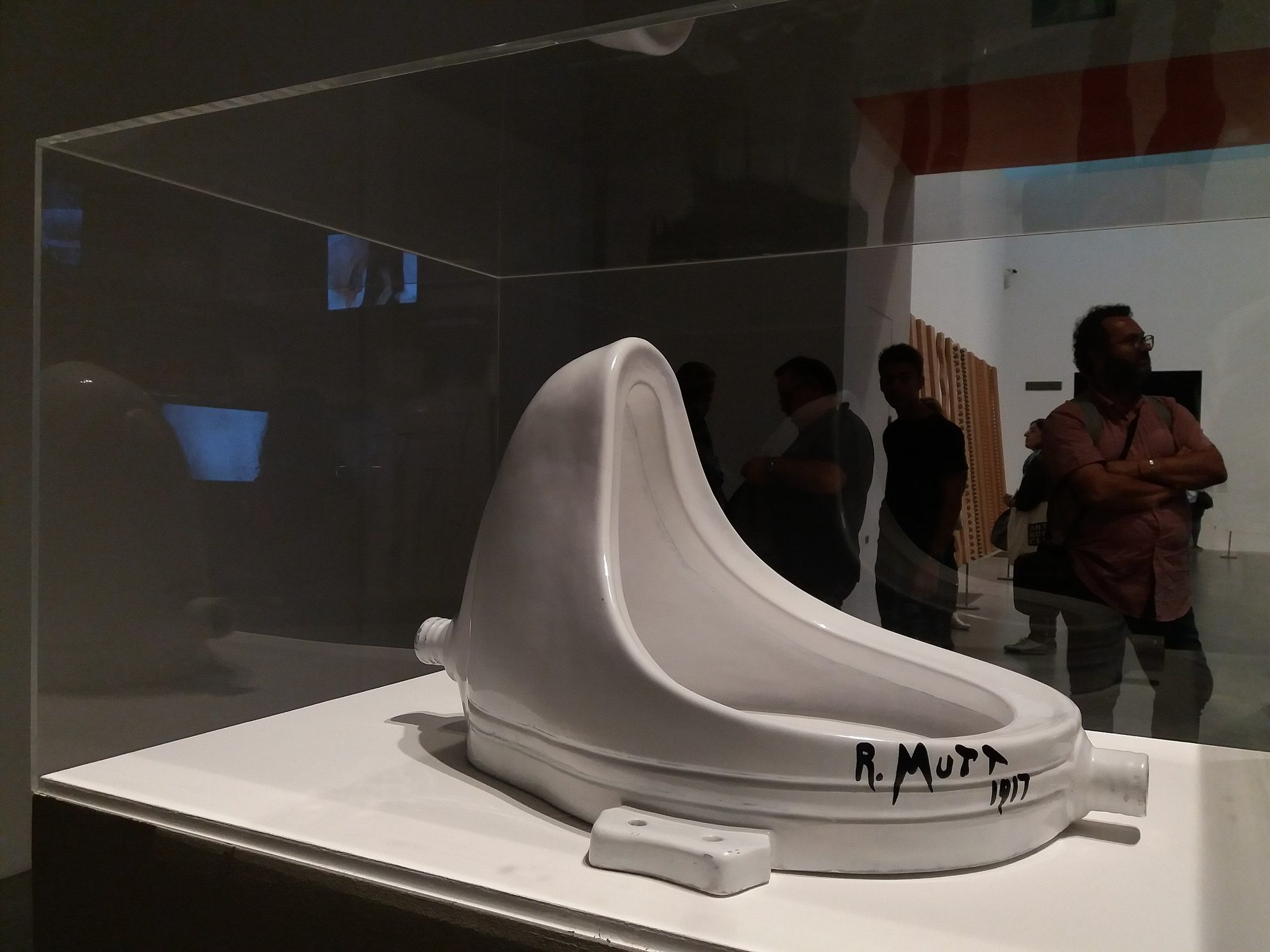
Some artists perhaps have unknowingly embraced some form of ideology; others have accepted it as a way of expressing themselves and as a means of an attempt towards changing the society they live in. To speak about how artists strived to challenge the world they live in with their ideologies, one cannot but mention Duchamp. Duchamp was instrumental in deconstructing the meaning of art. His particular and unique ideology at the time, challenged the way art and art institutions were recognised. Influenced by Marxist theories, Duchamp worked towards democratising art, for it not to be an elitist. For his work, titled Fountain, in 1917, he exhibited an object, which is used by all classes. Through his work, Duchamp wanted to deconstruct the notion that works of art that we see in museums are original.
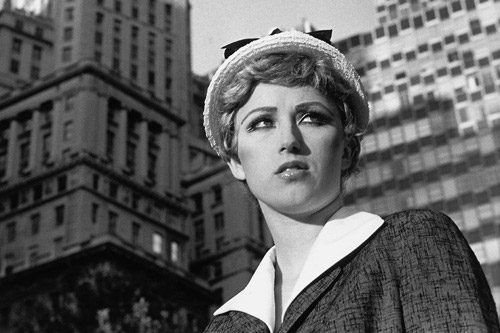
During the 1950s and 1960s, stereotypes for women existed in the homes, workforce and family. These stereotypes gave birth to feminist art. Artists with such an ideology strived to challenge this stereotype, and through their art they questioned the way society looks at women. Cindy Sherman is one such example. In her early black and white photos, Sherman embodies several characters from fictional Hollywood movies. Through this work, Sherman depicts several ‘types’ pertinent to that era. Her works acted as a statement to how women were being portrayed in the media, more often than not as passive beings, with specific roles, which are there to serve males in particular. Sherman has often ridiculed the media and throughout her works, she tried to instigate some sense in women. The cognitive philosophy Weltanschauung is about how the total sum of one’s experiences within a social and political context, affects the way we conceive and perceive the world around us. This philosophy acts as a framework for the production of works related to the context we live in.
To conclude, artists will always be entrapped within some form of ideology. To live is to think, to imagine and to create. Artists are after all a product of the society they live in, and whatever their reaction to it, it will always be an effect of the said society. Art can therefore be considered as the result of human experience in its surrounding world.
Join the Club
Like our stories?
You’ll (probably) love our newsletter.
@media only screen and (min-width: 981px) { .et_pb_subscribe .et_pb_newsletter_fields > p { flex: auto !important; } .et_pb_subscribe .et_pb_newsletter_fields p.et_pb_newsletter_field { margin-right: 2%; }}Read more
Powered by
Publications
Social
Legal