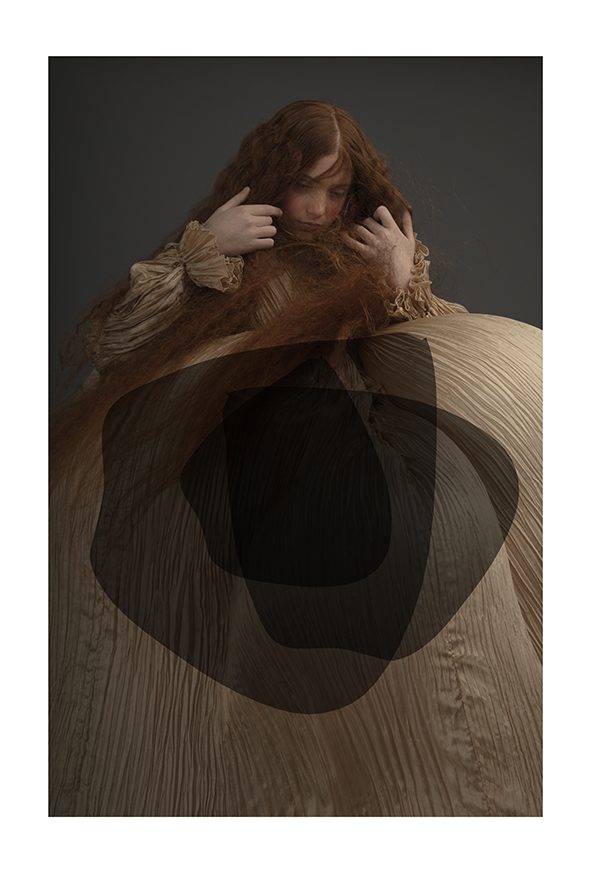
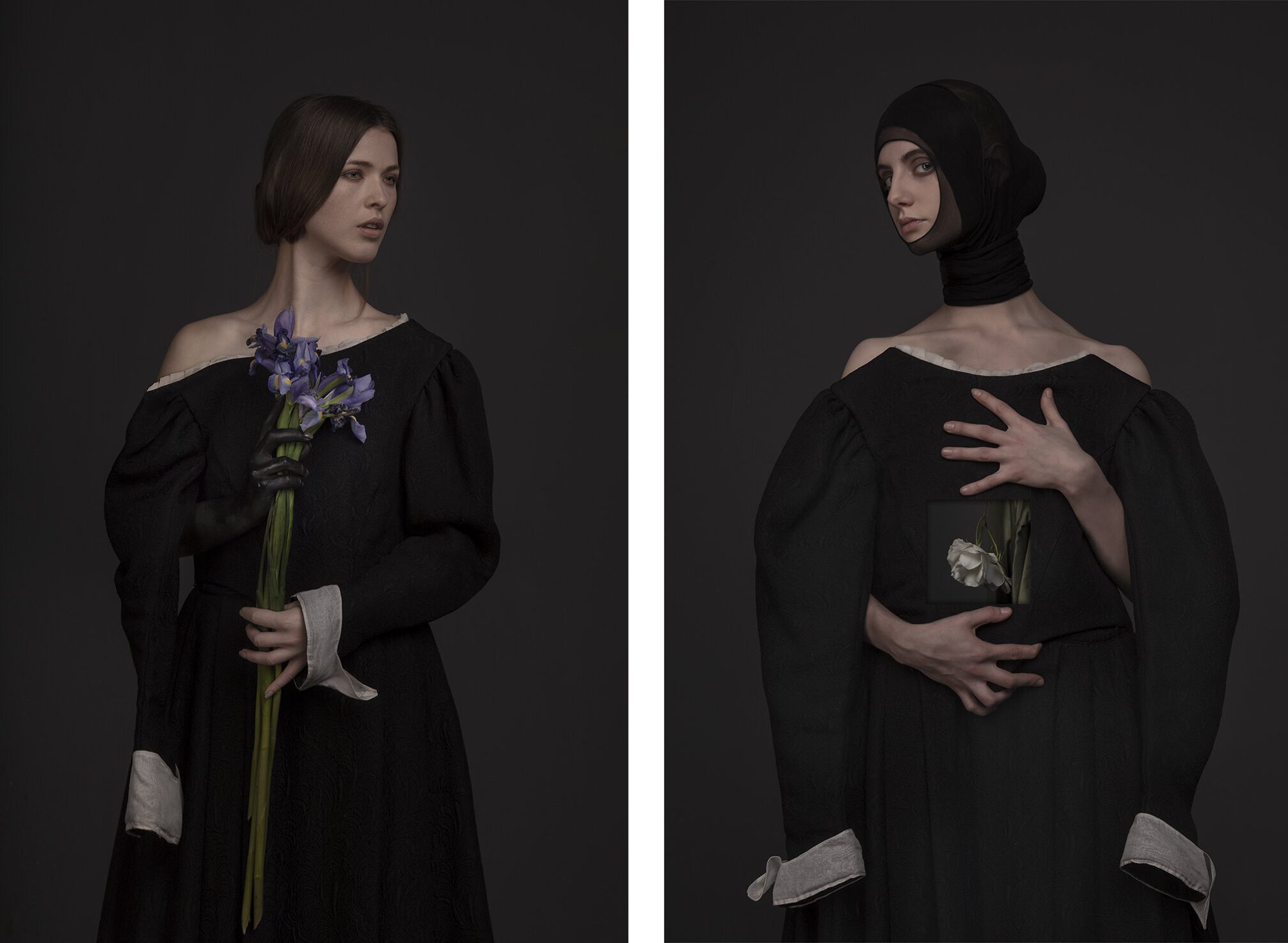
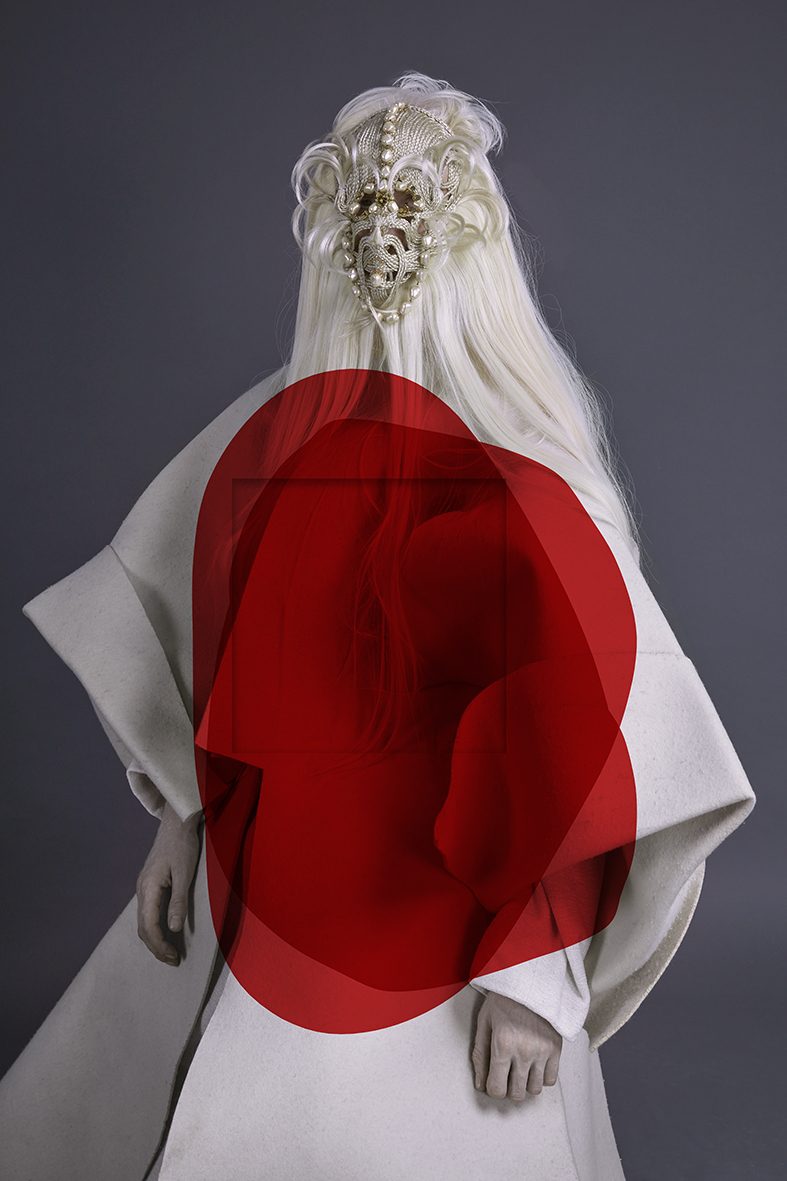
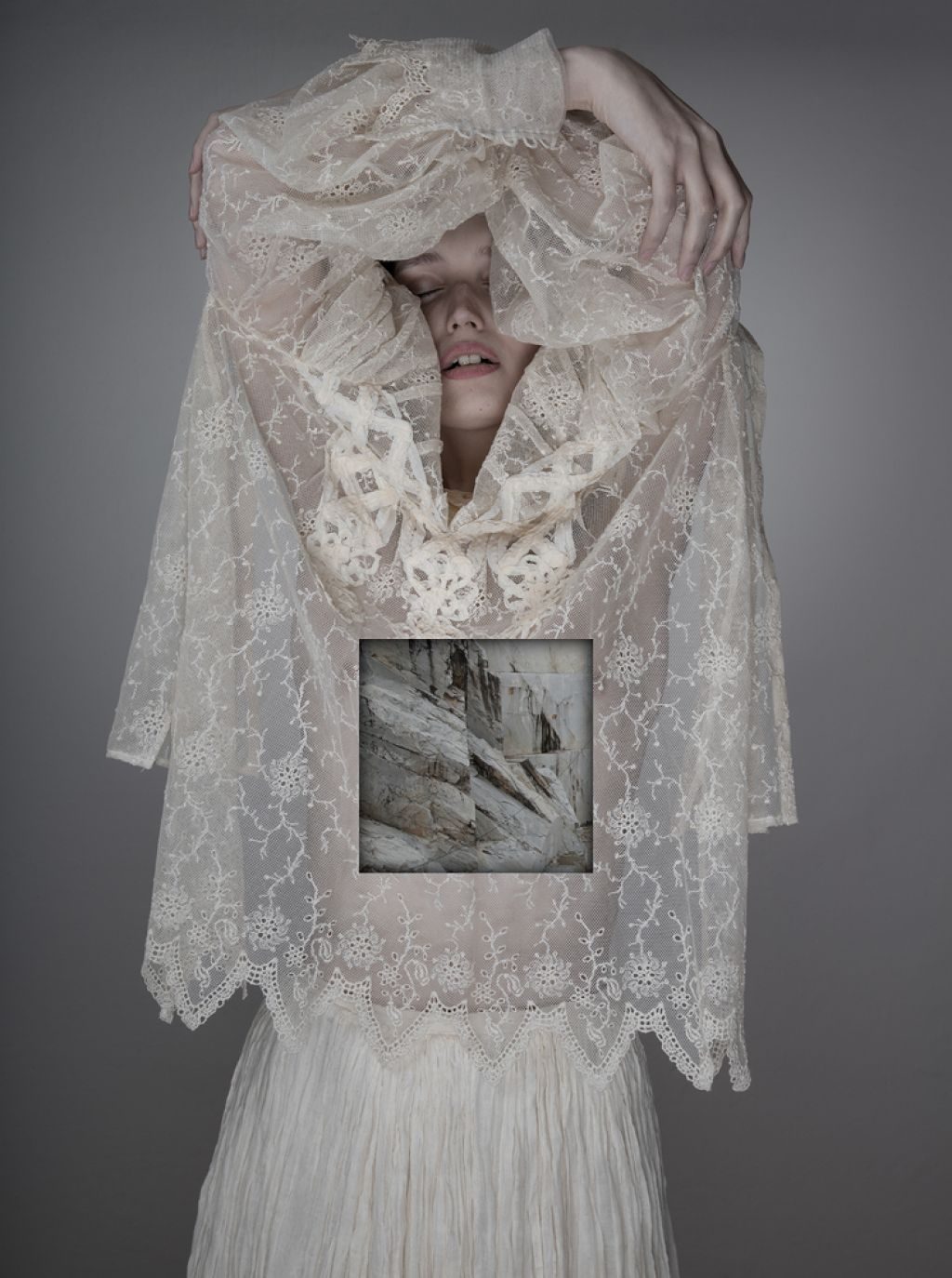
Interview by Jordi A. Bello Tabbi Visuals by Matteo Basilè In your artistic research, it is clear that there is a strong desire to create alternative, dreamlike situations that are brought back to reality through photography. In conceiving an artwork, do you start from a dream and make it real, or do you sublimate a real scene? My research tries to touch that sphere where the unconscious through the dream leaves traces that can be traced back to the reality I experience every day. The dream is the perfect habitat where my creatures, my characters live and reproduce. As in Goya’s work entitled the sleep of reason begets monsters, in mine, beauty and monstrosity coexist to tell my dreams. My visions often arise from human encounters, from stories told to me or from places I inhabit temporarily or in passing. Artistic experimentation is linked with technology in your works, how do you envisage the future of art? I have always considered myself a nerd, or rather a cannibal who feeds not only on images and imagery, but also on all those technological tools that can be perfect vehicles to transport my stories. In the past two years, the blockchain revolution and the advent of NFTs in the art world has revolutionized not the way art is made, but a new way of exchanging and selling art. I also find extraordinary the integration of AI into software that produces images in an epistolary relationship with the artist or through interaction alone. The possibilities that the digital world is making available to me and other artists are almost infinite. I find that the skills of an artist today is the use of these tools… It is a bit like what is happening with music. Autotune has homogenized a musical movement making one artist indistinguishable from another. Whatever technology or medium you use, I’m sure that the research, the story you want to tell has to be highly visible and your recognizability has to detach from the medium you use. The East, where you are often a guest, is very present in your imagery. What differences have you found between the Chinese versus the European art market? Asia has been like an ancestral call. My first trip to Southeast Asia opened me up to a world that I had not known until now. Not so much for its natural, architectural or scenic beauty, but for a human geography that until now I had never encountered. China, with which I continue to work after almost ten years and after a hiatus due to Covid, remains for me today one of the most complex and at the same time fascinating countries to work in. Both folk and contemporary art are part of this country’s DNA. Photography is finally entering the Chinese market but especially, public museums are taking an interest in photographic research. I think I was among the first Europeans to exhibit in a public space in China in 2009 bringing photographic and video works. The funny thing is that for years I have been traveling in China, and one of the most important places for me work-wise beyond the usual big cities that everyone knows, was Wuhan, now famous in the news for the virus. It was the first city I lived in and where the most important personal and institutional relationships with the Chinese authorities happened. There are many differences between the European and Chinese markets. Chinese collecting is linked to what we can identify as associations, or rather I would say clubs, where groups of entrepreneurs are guided toward buying. Many of these ‘clubs’ do it for speculation, but many others are very important centers where artists and entrepreneurs work together in a kind of post-communist patronage. Artists unlike what happens in Italy are very united, believe in teamwork, and create real working groups, comparing and sharing. Many of these are linked to academies, universities. The academy of fine arts in China is a very important institution that, for example, often determines the acquisition of artworks by the state. Museums are divided into public and private ones. Private museums determine the rise of either a Chinese or Western artist in the local or global art system. State museums, on the other hand, are bound by a more ‘censored’, conservative curatorial choice with a more precise focus on the old avant-garde. What about the themes currently being addressed by Asian artists? Chinese artists in their twenties to fifties are sponges who absorb Western techniques; remixing them and reinventing a pop version of our past that they have only now heard of or seen some photos of. There are also many extraordinary artists ranging from painting, sculpture, performance to video and photography who have a cross-cultural look at Chinese and international art history. They are courageous artists, typically working in formats, that we in the West would call gigantic. Bronze castings, large paintings painted with gunpowder, Chinese landscapes video-projected through thousands of square meters… Chinese art is really interesting, one which has a unique denominator: the great need to confront Western past history. Mao ultimately brought a billion people to a total historical/social blackout for fifty years, and the new generations, even with the current blockades and censorship, try at all costs to catch up with the past. Their works talk about that. They talk about time, about ancient history on the other side of the world, but they also talk about politics by reinventing codes that can escape the eye of state censorship. The human figure is always present in your work, what is your relationship with the models? How much of their personality and experience is present in the shots? Since I started my career, I immediately knew that I would choose the human figure to tell stories. Stories that are often intimate, often painful, told through characters found and sought in different social worlds. I am often drawn to their physicality, their personal history, and together with them I begin to construct an image, a picture, a frame of the long story that I am building series after series over these twenty-six years of uninterrupted work. I believe that the role of the artist is to tell the invisible, the unspeakable, what ‘others’ cannot see or hear. We artists have the role to do just that through our research, our works, we have to discover, reinvent and above all try in our every gesture and statement to show new coordinates for those who will come after us. From very large formats, to small miniatures embedded in ancient altars. How important is the physicality of the artwork? The materiality and rituality of an exhibition will be supplanted by the convenience of the virtual experience? My work has also always been distinguished by often ‘outsized’ formats where photos became real time doors into the worlds I was narrating. I am a child of a visual culture that narrates its saints and madonnas in huge altarpieces or frescoes that envelop all the senses. This view of the spiritual world led me to use the same often huge formats but often also as large as small miniatures. The size of the works goes hand in hand with the kind of narrative you make and the kind of intimacy you want to create with the viewer. In my latest work, I have returned to the use of the video image and especially to transporting some of my works to the NFT platform. This dematerialization of the work fascinates me because it makes the work even more rare and evanescent compared to the time we are living in where the culture of accumulation has made us forget the power of the life space of the work. At the same time, I have created physical media where I can store my digital works. An old hand-blown glass bell where inside, a state-of-the-art screen connected to your digital wallet allows you to make the ‘intangible’ work physical. The future and technology will never destroy the physical artistic fanufact, but rather take it to dimensions we would have only ever imagined. Explore art, photography and design that inspires you. Discover new artists, @media only screen and (min-width: 981px) { .et_pb_subscribe .et_pb_newsletter_fields > p { flex: auto !important; } .et_pb_subscribe .et_pb_newsletter_fields p.et_pb_newsletter_field { margin-right: 2%; }} Powered by Publications Social Legal ContactIn Conversation with Matteo Basilè
Be part of our
community
follow your favorites and connect with the creative community.Read more
Artist Feature
In Conversation with Matteo Basilé